Most parents enrolling their child in after-school sports want the same thing: a kid who gets better, stays active, and builds confidence. The default assumption is that signing up for one sport and sticking with it is the fastest path to all three. But a growing body of research in sports science and child development tells a more complicated story — and for kids under 12 especially, multi-sport programs for kids may produce better outcomes across nearly every dimension that parents actually care about.
This is not an argument against commitment or hard work. It is an argument about timing, biology, and what the developmental window before adolescence is actually designed for.
What the Research Says About Early Specialization
The push toward early single-sport specialization accelerated over the past two decades, driven partly by the rise of travel leagues and the belief that elite athletes got there by starting young and focusing early. But the data increasingly contradicts that narrative.
A 2019 study published in the Journal of Athletic Training found that early sport specialization was associated with a significantly higher risk of overuse injuries in youth athletes compared to those who participated in multiple sports. Researchers at the Hospital for Special Surgery have reported similar findings, noting that single-sport athletes under age 15 show rates of stress fractures and tendon injuries that are disproportionately high relative to their multi-sport peers.
Beyond injury risk, there is the burnout problem. A study from the American Medical Society for Sports Medicine found that early specializers are more likely to quit sport entirely by their mid-teens — often citing loss of motivation, exhaustion, and lack of enjoyment. The children who were pushed toward mastery earliest were, statistically, the ones most likely to walk away from sport altogether.
The counterintuitive finding across much of this research is that most elite adult athletes did not specialize early. A survey of Division I collegiate athletes found that the majority had played multiple sports through middle school, with specialization coming in high school or later. Roger Federer played several sports as a child. LeBron James was a highly recruited football player. The path to elite performance, more often than not, ran through variety.
What Multi-Sport Programs Build That a Single Sport Cannot
Movement Literacy
Different sports develop different fundamental movement patterns. Soccer builds lateral cutting and spatial awareness. Basketball develops vertical explosiveness and hand-eye coordination under pressure. Swimming builds breath control and full-body kinesthetic sense. A child who only plays soccer through age 10 is building one movement vocabulary. A child rotating through multiple sports is building several — and those patterns overlap and reinforce each other in ways that make athletes more adaptable and physically resilient over time.
Sports scientists refer to this as “movement literacy,” and it is considered foundational to long-term athletic development. The Canadian Sport for Life framework, one of the most widely adopted models in youth sports development globally, explicitly recommends sport sampling through approximately age 12 for this reason.
Social and Emotional Range
Single-sport programs tend to put children in the same social environment, with the same teammates and the same competitive dynamics, season after season. Multi-sport programs rotate children through different group structures, different roles, and different types of challenge.
In one sport, a child might be a natural leader. In another, they might be a beginner learning to follow someone else’s cues. That range of experience builds social flexibility and a more grounded sense of self — one not entirely tied to performance in a single domain. For children in high-need communities who may face pressure to define themselves early through sport as a pathway out, this breadth can be genuinely protective.
Intrinsic Motivation
Children who sample multiple sports are more likely to find activities they genuinely love, rather than staying in a program because of parental investment or social pressure. Research on self-determination theory in youth athletics consistently shows that intrinsic motivation — wanting to play because you enjoy it — is the single strongest predictor of long-term participation. Variety creates more opportunities for that authentic connection to form.
When Single-Sport Focus Actually Makes Sense
None of this means specialization is always the wrong choice. The question is when, and for whom.
Most sports development experts place the appropriate window for specialization between ages 13 and 15 for most sports — after the fundamental movement period is complete and once a child has had genuine exposure to multiple activities. Sports with unusually early peak performance windows, like gymnastics and figure skating, are sometimes cited as exceptions, though even in those cases, early hyperspecialization carries documented costs.
Parents should also consider the child’s own expressed interest. A nine-year-old who has tried several sports and consistently returns to one with high enthusiasm is showing something real. That is different from a nine-year-old who is in one sport because it was the first one offered and they have never tried anything else.
Ask three questions before committing to year-round single-sport programming for an elementary-aged child:
- Has this child had meaningful exposure to at least two or three other physical activities?
- Is the child’s enthusiasm coming from them, or from external pressure and social belonging?
- Is the program’s coaching philosophy focused on development and enjoyment, or primarily on competition outcomes?
If the answers point toward limited exposure, external motivation, and outcome-focused coaching, the case for pulling back and broadening the child’s experience is strong — regardless of how talented they appear to be right now.
How Kodely’s Multi-Sport Program Approaches This
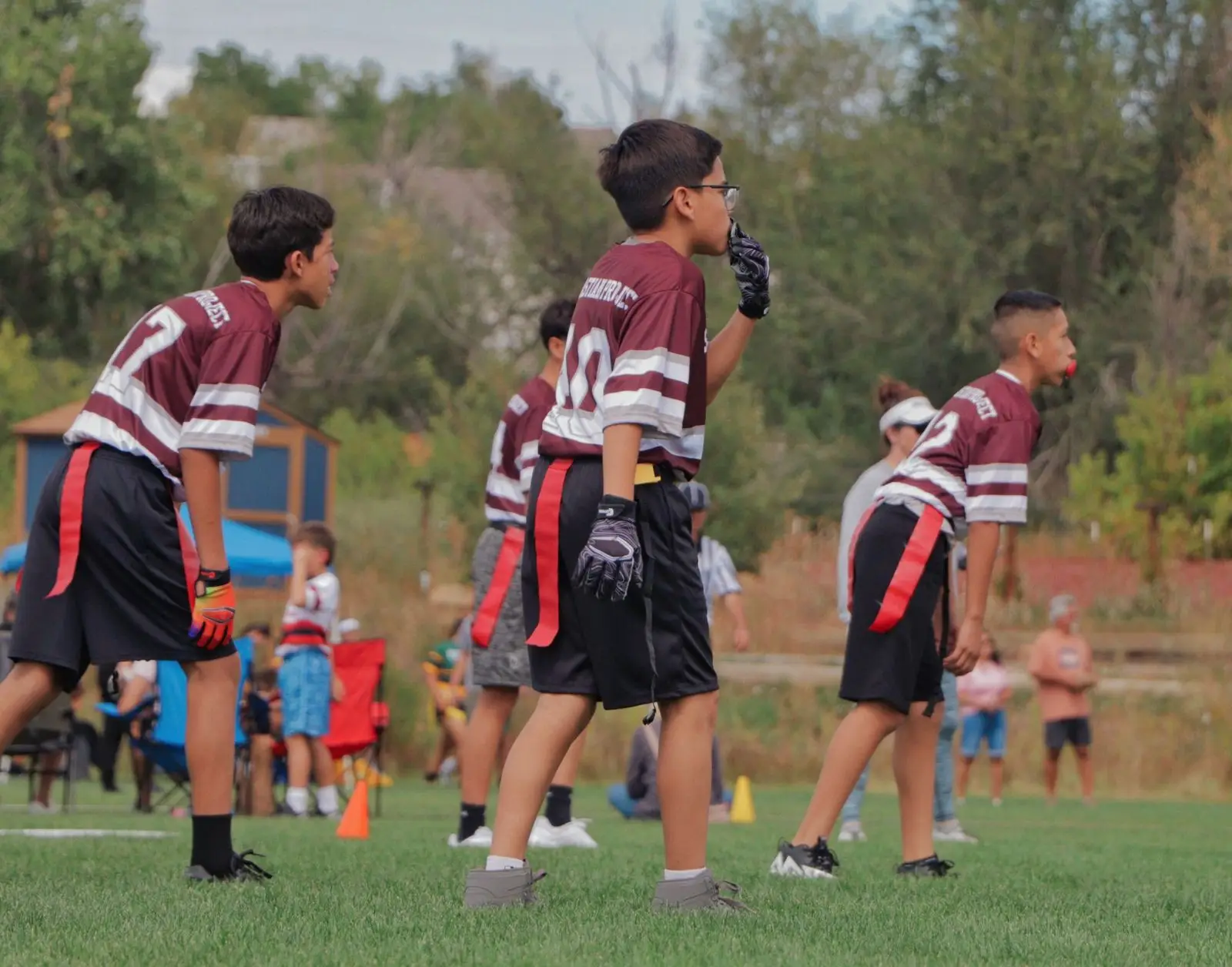
Kodely’s after-school sports programs are built specifically around the sport sampling model. Rather than locking elementary-aged students into one sport for a full semester, Kodely rotates children through multiple activities — flag football, basketball, soccer, and more — within structured, coach-led sessions designed to build both skill and joy.
The programs run in Title I schools and high-need communities where after-school enrichment options are often limited. For many of these students, Kodely’s multi-sport programming may be the only consistent athletic exposure they receive outside of PE class. That makes breadth not just a developmental nicety — it is a genuine equity issue. Children who only ever play one sport in structured settings have a narrower physical and social toolkit. Children who move through multiple sports are building a foundation that serves them whether they go on to compete seriously or simply stay active and healthy into adulthood.
Kodely coaches are trained to observe which sports resonate with individual children and to communicate those observations back to parents — turning the program into a feedback loop, not just an activity slot.
The Decision Framework Parents Actually Need
If your child is under 10, the developmental case for multi-sport exposure is about as clear as it gets in youth athletics research. Prioritize variety, protect enjoyment, and resist the pressure to specialize before the foundation is built.
If your child is between 10 and 12, watch for genuine passion signals and continue encouraging cross-sport exposure. Specialization can begin to make sense in this window, but only when it is child-led and not at the expense of overall physical development.
If your child is 13 or older and expressing strong, consistent interest in a specific sport, specialization becomes a much more defensible choice — especially if they have the movement foundation that multi-sport participation builds.
The goal of after-school sports at any age should not be to produce an elite athlete on a deadline. It should be to produce a child who is physically capable, emotionally resilient, genuinely motivated, and still playing something they love at 25. The research is consistent on which path gets you there more reliably.