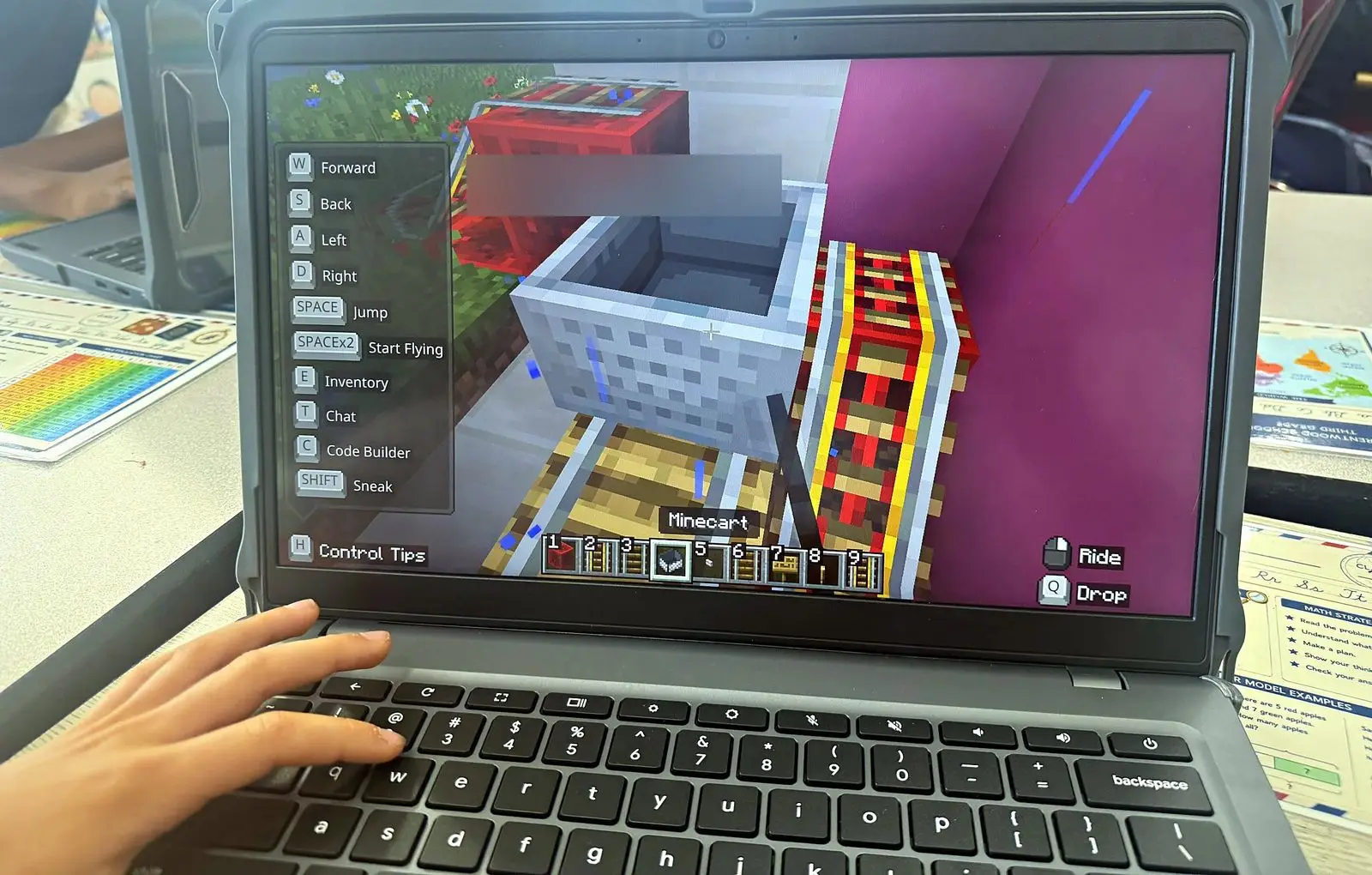
Here is what a lot of people get wrong when they first hear the name Kodely: they assume it is a coding school. Maybe a robotics club. Something with Minecraft, probably. They picture kids in hoodies staring at laptop screens writing Python.
That picture is not entirely wrong. We do teach coding. But if that is all you think Kodely is, you are missing the bigger story — and honestly, the more important one.
Kodely is an expanded learning provider for TK through 12th grade students across California. That means we show up at schools and run programs that go far beyond what most people expect from “after school.” We cover seven distinct program areas. We hire, train, and manage our own instructors. We handle all of it, so schools do not have to.
And we do most of this work in schools that could not easily afford it otherwise.
What Kodely Academy Programs Actually Look Like
Let us walk through what actually happens in a Kodely school. On any given week, depending on the campus, you might see:
A fifth grader building a CAD model of a bridge she designed herself. A second grader learning the difference between wants and needs as part of a mini entrepreneur pitch competition. A group of sixth graders debating how their school’s food waste ends up in a landfill and what to do about it. A kid who has never cooked anything at home chopping vegetables and following a recipe for the first time.
That is Kodely. That is what our seven program areas look like when they are working.
The 7 Kodely Program Areas
1. Design, Engineering, and Computer Science
This is where the coding reputation comes from, and it is earned. Our DE&CS programs introduce students to programming, game design, robotics, CAD modeling, and computational thinking. But the goal is never just to teach syntax. The goal is to give students the mental models and confidence to build things with technology — not just consume it.
2. Arts
Visual arts, music, performance, and creative expression. Arts education in Title I schools has been cut more aggressively than almost anything else over the past two decades. Kodely arts programs are not extracurricular flourishes. They are core. Students learn to make, interpret, and communicate through multiple creative mediums.
3. Entrepreneurship
We teach students to think like problem solvers who can also bring their ideas to life. That means financial literacy, pitching, market thinking, and real-world application. In our Entrepreneurship programs, students build miniature businesses, compete in pitch nights, and learn to handle failure as data rather than defeat.
4. Environmental Citizenship
Science education meets civic responsibility. Students learn about ecosystems, sustainability, climate, and the relationship between human decisions and environmental outcomes. More importantly, they learn that their actions — and their advocacy — matter.
5. Science
Hands-on, inquiry-driven science that builds curiosity before it builds vocabulary. Students conduct experiments, test hypotheses, and engage with the scientific method in ways that feel relevant to their actual lives.
6. Social-Emotional Learning
SEL is woven into every program Kodely runs, but we also offer it as a standalone focus area. Students develop self-awareness, interpersonal skills, emotional regulation, and the capacity to work through conflict. In communities that face compounding stressors, SEL is not a nice-to-have. It is structural.
7. Sports and Physical Education
Physical activity, teamwork, goal-setting, and the discipline that comes from organized sport. Our Sports and PE programs give students access to structured athletic programming regardless of whether their school has a gym, a coach, or a budget for equipment.
Why Seven Programs? Why Not Just Pick One?
Because kids are not one thing.
The student who is disengaged in the science program might light up in entrepreneurship. The student who cannot sit still in traditional academics might discover deep focus when she is designing a building in TinkerCAD. The student who has never seen a reason to try might find it on a soccer field with a coach who actually shows up every week.
Kodely offers seven program areas because we know that a single modality is not going to reach every kid. And when the population you are serving has historically been underserved by almost every institution around them, you do not get to narrow the pipeline. You open it wider.
What a Typical Kodely School Looks Like
A typical Kodely school is a Title I campus — meaning at least 40 percent of students qualify for free or reduced-price meals. These are schools where enrichment has often been inconsistent: a volunteer here, a grant-funded pilot there, a teacher who stays late because she cares but burns out by February.
Kodely comes in as a full partner. We recruit instructors from the communities we serve. We train them. We provide curriculum, materials, and ongoing coaching. The school does not have to manage the hiring paperwork, the background checks, the lesson planning, or the instructor turnover. We handle it.
Schools fund Kodely through ELOP, LCAP, CTE grants, and Camp Viva Foundation scholarships — which exist specifically to ensure that financial barriers do not exclude individual students.
On the Name
Yes, the name has “kode” in it. It was a choice made when the organization was younger and more narrowly focused. But the mission evolved. The name stayed because it is recognizable — and because there is something intentional about a word that signals technology and access at the same time.
We are not apologizing for the name. We are just making sure you know what is behind it.
Ready to Learn More?
Visit kodely.io to explore our programs or reach out to our partnerships team to talk about bringing Kodely to your school.