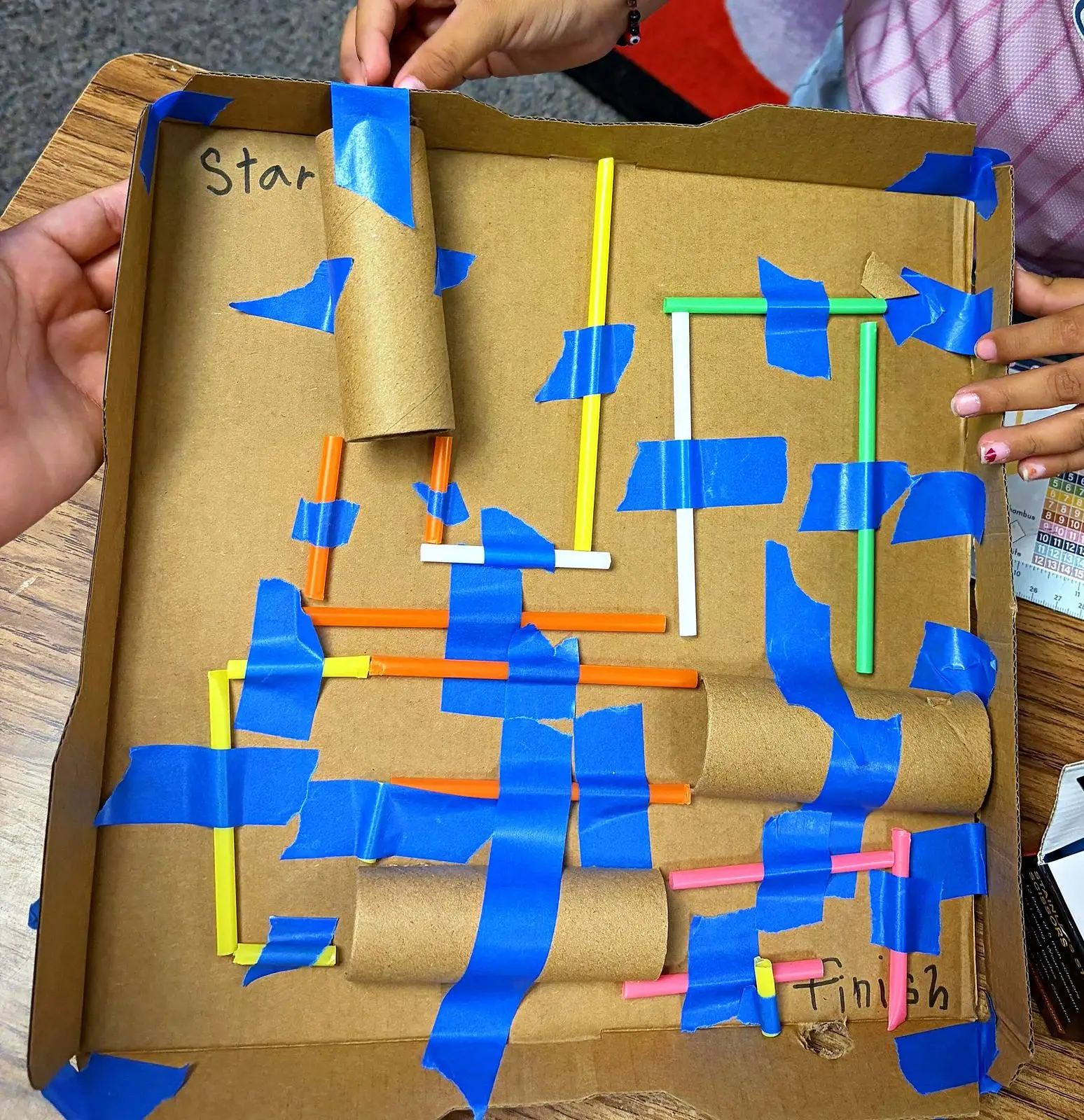
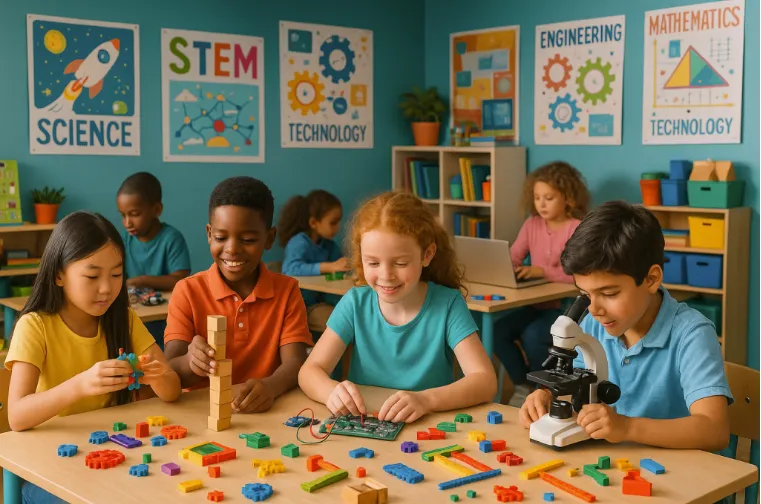
Hands-on activities are key to sparking curiosity and making early STEM education fun for young learners.
Our world is driven by technology and complex challenges. The most valuable gift we can offer children isn’t just knowledge—it’s curiosity. Additionally, nothing fuels curiosity like STEM: Science, Technology, Engineering, and Mathematics. The benefits of early STEM education are profound, setting the stage not only for academic success but also for building a foundation for lifelong learning and problem-solving
The Power of Early Exposure
Children are natural scientists. From their earliest days, they explore, ask questions, and experiment. Why does the sun shine? What makes a toy move? These are early scientific inquiries. Introducing STEM concepts early validates their curiosity and gives them tools to explore it further.
Research shows that the early years are critical for brain development. The Harvard Center on the Developing Child states that over one million new neural connections form every second. This occurs during early childhood. Additionally, hands-on problem-solving STEM activities help stimulate these connections and support skills like cognitive flexibility, emotional regulation, and memory.
Early STEM Education Benefits: Breaking Down Barriers
STEM is often thought to suit only a specific “type” of person. This stereotype is harmful and portrays the ideal candidate as male, analytical, and naturally gifted. But, this stereotype has excluded generations of bright minds. As a result, this is why early STEM education helps challenge that narrative.
When children from all backgrounds engage in STEM, they start to see it as something that is for them. Girls, children of color, and those from undeserved communities, in particular, gain significantly from inclusive STEM opportunities. Representation matters—when children see diverse scientists and engineers, they more commonly see themselves in those roles. Early exposure helps build confidence and opens the door to future aspirations.
STEM is a Life Skill
STEM isn’t just about memorizing formulas—it’s about thinking critically, solving problems, and adapting to change. Additionally, these skills are essential in today’s world. Whether kids are designing a simple structure or debugging a coding project, they learn resilience, creativity, and logic.
These early experiences foster a growth mindset—the belief that abilities develop through effort. Notably, they also help children become more confident decision-makers, capable of analyzing situations and making thoughtful choices. From understanding graphs to evaluating health information, STEM knowledge empowers children in everyday life.
Real-World Relevance
The challenges today’s children will face—climate change, global health, automation—will need STEM-powered solutions. Yet, early STEM education isn’t just about producing future scientists. It’s about raising informed citizens and future leaders capable of engaging with the world around them.
As our society becomes more digital, understanding technology and data is as fundamental as reading and writing. Indeed, early STEM education builds the foundation for safe and savvy participation in the modern world.
Making Early STEM Education Fun and Accessible
For example, for young children, the best learning happens through play. Building with blocks, mixing colors, or exploring nature can introduce STEM concepts in joyful, intuitive ways. Interdisciplinary learning—like integrating STEM into art, music, and storytelling—deepens understanding and helps children make lasting connections.
Additionally, technology can also enrich early STEM learning when used intentionally. Apps and coding platforms designed for children encourage interactive learning. In return, they can be powerful when used alongside guidance from educators or parents.
Equity is essential. Access to quality STEM education should not depend on a child’s socioeconomic background. Community centers, libraries, and schools must collaborate to guarantee that all children have the opportunity to explore STEM. In fact, this includes investing in resources, training for teachers, and inclusive curricula that show and support all learners.
The Role of Parents and Educators in Early STEM Education
Parents and educators are children’s first STEM mentors. Their support, curiosity, and encouragement shape how children view their abilities. Indeed, simple actions like asking questions, exploring together, or celebrating effort can have a lasting impact.
Parents don’t need to be STEM experts. Everyday activities—like baking, going for a walk, or building a fort—can become rich STEM learning experiences. Thus, the key is to be curious together.
Educators need support, too. Professional development, hands-on materials, and access to culturally responsive teaching strategies can help them confidently integrate STEM into the classroom.
In fact, schools that emphasize inquiry, experimentation, and play help children develop confidence and creativity. From maker spaces to classroom projects, giving students the freedom to explore makes a lasting difference.
Building the Pipeline Starts Early
Conversations about STEM often start in middle or high school. Indeed, by then, many students have already formed opinions about their interests and capabilities. To achieve a diverse and dynamic STEM workforce, we must start in early childhood.
For example, according to the U.S. Bureau of Labor Statistics, STEM occupations are growing nearly twice as fast as other fields and offer higher-than-average wages. This highlights a key aspect of the early STEM education benefits. Fostering interest at a young age is not just smart education. It’s smart economics.
A Call to Action for Early STEM Education
For parents, consider reading a science-themed book with your child. Teachers, try a new hands-on activity this week. Policymakers or business leaders should support early STEM initiatives and fair access.
Additionally, nonprofits and companies can help by sponsoring STEM kits, mentoring programs, or funding community events. Everyone benefits from a society where all children can dream, explore, and innovate.
Every spark of curiosity we nurture today lights the path to tomorrow’s discoveries.
Let’s make early STEM a priority—because the future doesn’t start in college. It begins in kindergarten.