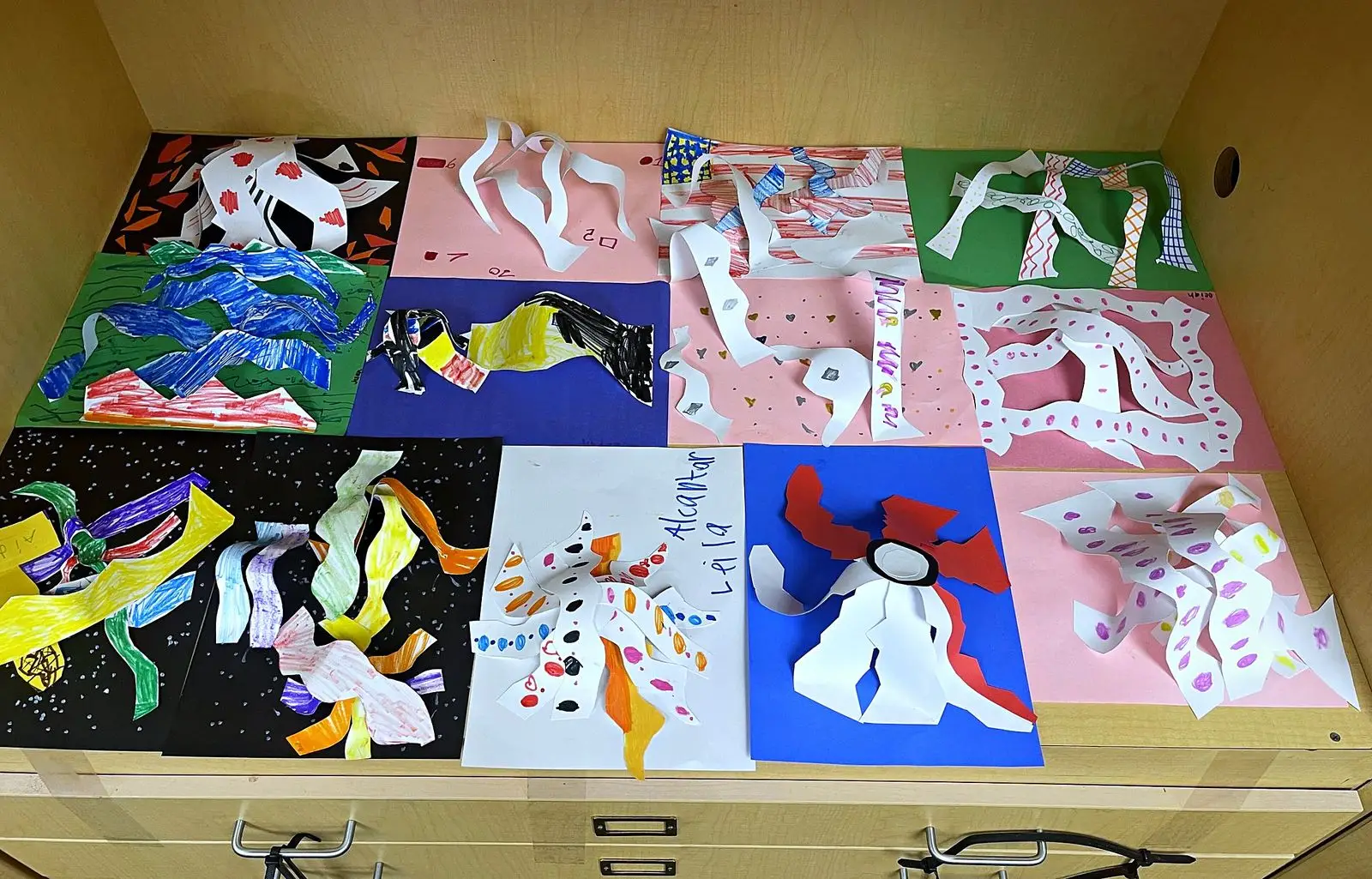
After-school art programs for trauma-affected students occupy a peculiar and underappreciated middle ground. They are not therapy. They carry no diagnostic weight, no treatment goals, no clinician in the room. And it turns out that absence — of clinical framing, of high-stakes evaluation, of a right answer — is precisely what makes them effective for a population that has learned, through hard experience, to distrust structures that feel like tests. Research on expressive arts and neurological regulation increasingly supports what experienced art educators have observed for decades: the act of making something with your hands, in a low-pressure environment, reaches students who have already shut the door on traditional academic engagement.
Why Trauma Disrupts Learning Before It Disrupts Behavior
To understand why visual arts programs can move the needle for trauma-affected students, you first need to understand what trauma does to the brain’s readiness to learn. The concept of the “window of tolerance,” developed by psychiatrist Dan Siegel and later expanded by trauma researchers including Peter Levine, describes the neurological state in which a person can process information, regulate emotion, and engage with others. Inside that window, learning is possible. Outside it — in states of hyperarousal (anxiety, hypervigilance, fight-or-flight) or hypoarousal (shutdown, dissociation, emotional numbness) — the prefrontal cortex, which governs executive function and academic reasoning, is effectively offline.
Students with chronic trauma histories, including exposure to community violence, food insecurity, household instability, or adverse childhood experiences (ACEs), spend more time outside that window than their peers. A 2019 review published in Child Development Perspectives found that children with four or more ACEs showed significantly higher rates of hyperactivation in the amygdala and lower activation in prefrontal regions during tasks requiring cognitive flexibility. Those are exactly the brain regions and capacities that academic instruction targets. Trying to teach fractions or reading comprehension to a child who is neurologically in survival mode is not an instructional problem. It is a sequencing problem. Regulation has to come before academics — not as a therapeutic intervention, but as a practical prerequisite.
What Expressive Arts Research Actually Shows
The evidence base for expressive arts as a regulatory tool has grown substantially in the past fifteen years, and it cuts across disciplines: occupational therapy, developmental psychology, trauma research, and educational neuroscience.
A 2018 meta-analysis in Trauma, Violence, and Abuse examined 37 studies on arts-based interventions with trauma-exposed youth and found consistent evidence of reductions in post-traumatic stress symptoms, anxiety, and behavioral dysregulation. Importantly, the studies with the strongest effects were not clinic-based art therapy programs — they were school and community settings with trained facilitators, structured creative choice, and low evaluative pressure. The mechanism researchers identified was not catharsis or symbolic processing, though those things occurred. It was sensorimotor engagement: the physical act of mixing colors, building with clay, cutting, layering, and manipulating materials activates the body in ways that interrupt the dysregulation cycle and bring students back into their window of tolerance.
Dr. Cathy Malchiodi, one of the leading researchers in trauma-informed expressive arts, distinguishes between “art as therapy” and “art in therapy” — but her work also supports a third category: art as environment. When the environment itself is built around non-evaluative creative choice, it creates what she calls “safe uncertainty” — the experience of not knowing exactly what will emerge, without that uncertainty feeling threatening. For students whose nervous systems have been shaped by unpredictable environments, safe uncertainty is a form of corrective experience.
The Role of Sensorimotor Engagement
Visual arts, specifically, offer something that many other enrichment modalities do not: sustained, bilateral, fine-motor engagement that occupies the body without demanding verbal output. Research on bilateral stimulation from the EMDR literature, as well as occupational therapy studies on proprioceptive input, suggests that hand-intensive activities help regulate the autonomic nervous system. A student who is hypervigilant when they walk into an after-school program may spend the first twenty minutes of a watercolor or printmaking session simply returning to baseline — and that return to baseline is not wasted time. It is the prerequisite for everything else.
Why the Non-Clinical Frame Is a Feature, Not a Limitation
Here is where after-school visual arts programs have a structural advantage that is rarely named explicitly. When a student enters a clinical or therapeutic art setting, they know — or quickly infer — that their artwork will be interpreted, that their choices mean something, that someone is watching for signs of distress or progress. That frame, however well-intentioned, reintroduces exactly the kind of evaluative pressure that activates the threat response in trauma-affected students.
An after-school art program carries none of that. The student is there to make things. The instructor’s job is to facilitate, offer materials, and respond to the work on its aesthetic terms. There is no chart being filled out. There is no treatment goal being tracked. The result is that students who would never voluntarily enter a counseling office — and who have learned to perform compliance in academic settings without genuine engagement — often drop their guard in ways that surprise both parents and educators.
Kodely’s visual arts instructors are trained to recognize the difference between a student who is disengaged and a student who is regulating. Those two states look nearly identical from the outside. A child who is quietly mixing paint and not talking to anyone may be doing exactly what their nervous system needs in that moment. Intervening prematurely with prompts or social demands can pull them back out of the window of tolerance. Letting them work, and offering presence without pressure, is itself a co-regulation strategy.
Co-Regulation Without a Clinical Label
Co-regulation — the process by which a regulated adult helps a dysregulated child return to a calm, engaged state — does not require a therapist. It requires an adult who is themselves regulated, who can tolerate a range of emotional expressions without becoming anxious or punitive, and who creates an environment where the child’s internal state is not a problem to be solved. Skilled after-school arts educators do this every day. They just rarely have the language for it.
What Trauma-Informed Design Looks Like in an After-School Arts Program
There is a meaningful difference between a program that is trauma-informed by design and one that has simply added a trauma-awareness slide to its staff training. For parents and administrators evaluating after-school visual arts programs, here are concrete signals of genuine trauma-informed design.
Signals of a Well-Designed Program
- Predictable structure within creative freedom. Trauma-affected students need to know what will happen when they arrive, even if what they make is entirely open-ended. Consistent routines — same greeting, same setup sequence, same closing ritual — reduce ambient threat without restricting creative expression.
- Opt-in sharing, not mandatory sharing. Requiring students to show and explain their work to the group reintroduces evaluative pressure. Programs with strong trauma-informed design make sharing voluntary and frame it as an option, not an expectation.
- Instructor responses that describe rather than evaluate. “I see you layered three colors there” is a different kind of statement than “that’s beautiful.” The first invites the student to engage with their own process. The second positions the instructor as the arbiter of quality — which is exactly the dynamic trauma-affected students tend to shut down around.
- Access to sensory materials across multiple intensity levels. Some students need high-resistance materials like clay or collage when they are dysregulated. Others need quiet, low-stimulation mediums like pencil sketching. Offering range is not just good pedagogy; it is regulatory accommodation.
- No punitive response to incomplete or abandoned work. A student who starts three projects and finishes none is not failing. They may be experimenting with the experience of starting something without catastrophic consequences — which is itself a significant accomplishment for a child who has learned that beginnings lead to loss or disappointment.
- Trained staff, not just well-meaning volunteers. Programs that rely primarily on volunteers without structured training around trauma response are not trauma-informed by design, regardless of their intentions. Ask directly: what is