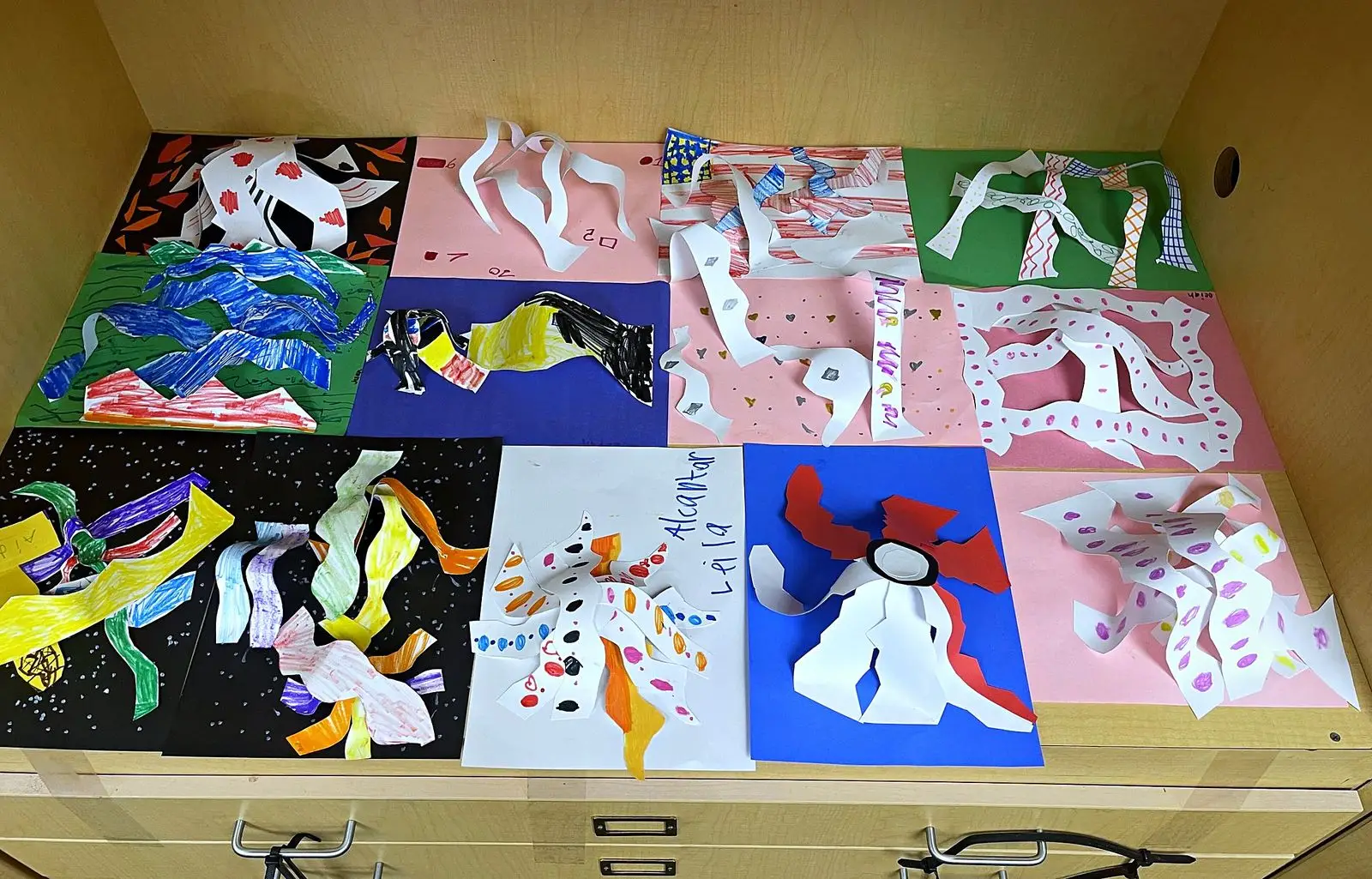
After-school visual arts programs for kids rarely get the same outcome-driven attention as reading interventions or math tutoring. When budgets tighten, arts are the first to go. When administrators evaluate enrichment vendors, arts programs are often assessed on participation rates and student enjoyment — not on measurable cognitive outcomes. That framing is a mistake, and neuroscience is increasingly clear about why. A growing body of research shows that structured visual arts instruction builds the same executive function skills that predict academic success, career readiness, and long-term well-being. The problem is not the research. The problem is that most school schedules and enrichment decisions have not caught up with it.
What Executive Function Actually Means — and Why It Matters More Than IQ
Executive function is a set of mental processes that allow people to plan, focus, remember instructions, and manage multiple tasks at once. It operates primarily through the prefrontal cortex and includes three core components: working memory, cognitive flexibility, and inhibitory control. Researchers at Harvard’s Center on the Developing Child have described executive function as the “air traffic control system” of the brain — without it, even high-aptitude students struggle to translate knowledge into performance.
The reason this matters for schools is straightforward: executive function skills are stronger predictors of academic achievement than IQ in multiple longitudinal studies. A 2017 study published in Psychological Science found that kindergarteners’ executive function scores predicted third-grade math and reading outcomes more reliably than early academic skills alone. These are not peripheral skills. They are the foundation that everything else runs on.
The further complication is that executive function is not fixed. It is highly trainable, especially during childhood and early adolescence — which is precisely the window that after-school programs occupy.
The Neurological Case for Structured Visual Arts Instruction
Not all arts activities build executive function equally. There is a meaningful difference between free drawing time and structured visual arts instruction that involves planning, iteration, and self-assessment. The research is specific about this distinction.
Planning and Goal-Directed Behavior
When a student is asked to produce a finished artwork — a ceramic piece, a multi-step illustration, a relief print — they have to think ahead. They must visualize an outcome that does not yet exist, identify the steps required to reach it, sequence those steps, and adjust when something does not go as expected. A 2019 review in Frontiers in Psychology documented that this kind of goal-directed creative production activates the dorsolateral prefrontal cortex, the same region most implicated in planning and working memory tasks. The arts are not a break from cognitively demanding work. For students in well-designed programs, they are cognitively demanding work.
Working Memory Under Load
Visual art requires students to hold multiple variables in mind simultaneously: color relationships, spatial proportions, the original intention, the emerging result, and the gap between them. This is working memory under real conditions. A 2015 study from the Dana Foundation’s arts and cognition research program found that sustained engagement in visual arts training was associated with improved attention and working memory in school-age children, with effects that transferred to non-arts academic tasks. The transfer finding is critical — it is not just that kids get better at art. They get better at tasks that require similar cognitive architecture.
Cognitive Flexibility and Error Revision
Cognitive flexibility — the ability to shift thinking strategies when one approach is not working — is perhaps the most underappreciated of the executive function trio. It is also directly trained by studio art practice. When a student’s sketch does not match their vision, they do not get to delete it. They have to assess what went wrong, adjust their mental model, and try a different approach. This iterative problem-solving cycle, repeated across weeks and months of structured arts programming, builds the neural pathways associated with flexible thinking. Research by neurologist Stanislas Dehaene on learning and the brain suggests that error-based learning — confronting a gap between expectation and result — is one of the most reliable drivers of neural plasticity in children.
Why After-School Is the Right Setting for This Work
There is an argument that visual arts instruction belongs in the school day, and it does. But after-school programs offer structural advantages that the school day often cannot. Time is the most obvious one. A 45-minute class period rarely allows students to get deep enough into a project to engage the planning and iteration cycles that build executive function. After-school programs at Kodely typically run 60 to 90 minutes, which gives students enough time to encounter real problems within their projects and work through them — not just complete a warm-up activity.
The lower-stakes environment matters too. In a graded classroom, students are often motivated to produce something acceptable rather than something ambitious. After-school arts programs tend to reward risk-taking and experimentation more naturally, which increases the frequency of productive failure — the exact condition that drives cognitive flexibility development.
There is also the issue of access. In Title I schools, where Kodely primarily operates, arts programs have been cut at far higher rates than in more affluent districts. A 2019 report from the Brookings Institution found that students in high-poverty schools were significantly less likely to have access to arts instruction than their peers in low-poverty schools. After-school programs are not a substitute for restored arts curricula, but they are a meaningful way to close an access gap that has real cognitive consequences.
What Good Program Design Actually Looks Like
Not every after-school arts program builds executive function. The research points to specific design features that separate programs with measurable outcomes from those that amount to supervised free time.
Sustained Engagement Over Multiple Sessions
One-off projects do not produce the executive function benefits documented in the research. Students need to return to the same project across multiple sessions, which requires them to remember prior decisions, re-engage with a partially-completed goal, and make forward-looking choices. Kodely’s visual arts programs are structured around multi-week project cycles specifically because sustained engagement is where the cognitive work happens.
Explicit Reflection Practices
Programs that ask students to articulate what they are trying to accomplish, what is working, and what they would change are doing more than building metacognition — they are practicing the verbal scaffolding of executive function. Structured critique, self-assessment rubrics, and instructor-guided reflection are not optional enrichment touches. They are core mechanisms of the learning model.
Instructor Quality and Intentional Facilitation
Student outcomes in arts programs are heavily dependent on instructor practice. Facilitators who ask probing questions — “What were you trying to do here? What happened instead? What would you try differently?” — are actively training planning and cognitive flexibility. Facilitators who simply circulate and praise finished work are not. This is why instructor training and curriculum design matter as much in arts programs as they do in literacy or STEM interventions.
The Outcome-Driven Case Administrators Need to Make
School principals and district administrators are under pressure to justify every line item in terms of student outcomes. The arts have historically struggled in that conversation because the outcome framework being used — test scores and grade-level benchmarks — does not capture what structured arts instruction produces. The more useful frame is executive function development, which does connect to academic outcomes, and which after-school visual arts programs for kids are well-positioned to deliver when designed and implemented with the same rigor applied to any evidence-based intervention.
The research exists. The neurological mechanisms are understood. What remains is for program selection and enrichment funding decisions to reflect what neurologists and cognitive scientists have known for years: visual arts is not a reward for students who finish their real work. For many students, it is where some of the most important cognitive development happens.