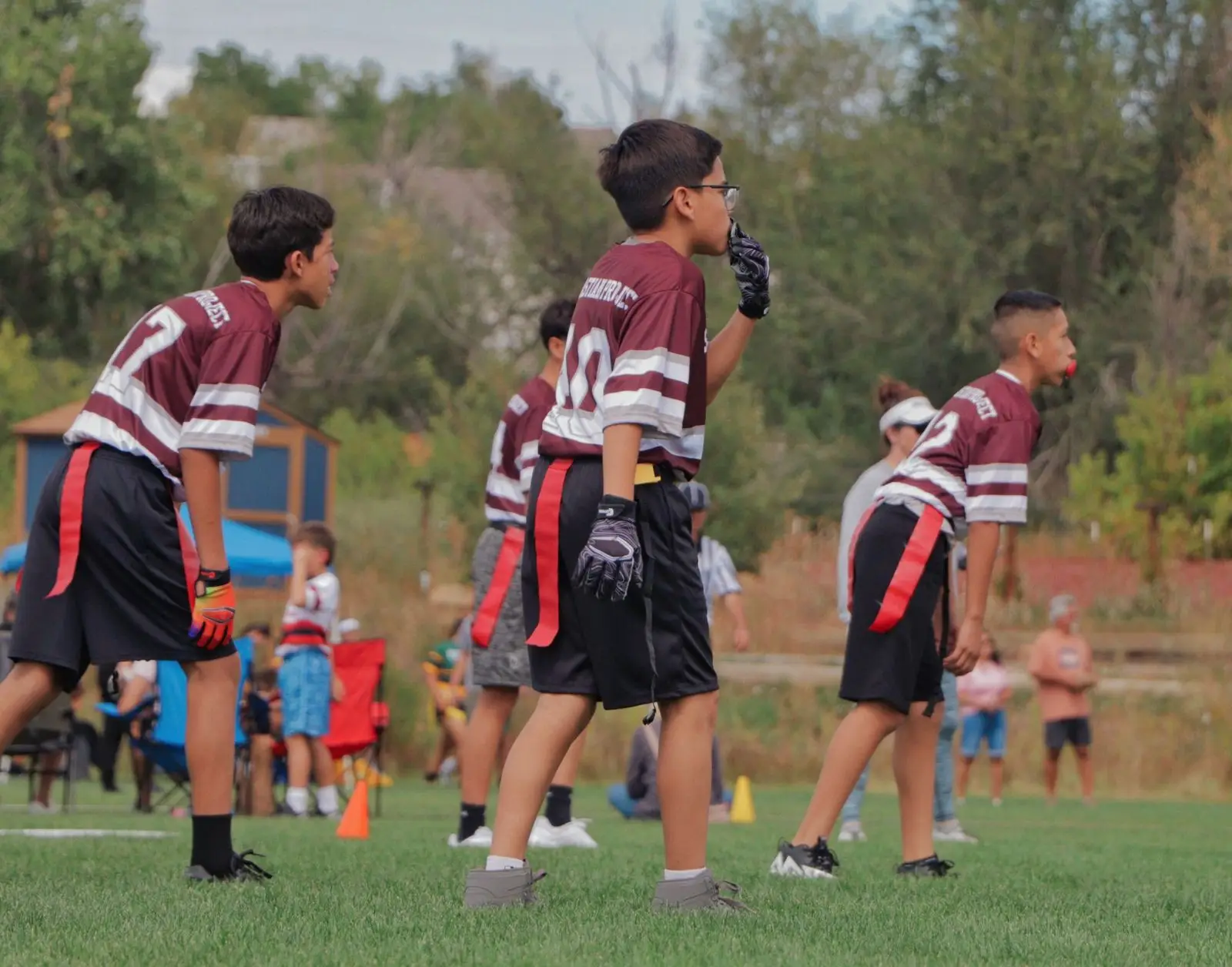
Most parents searching for after-school soccer programs for kids are looking for one thing: a place for their athletic child to develop skills and burn energy. That framing leaves out a significant group of kids — the ones whose parents assume soccer simply isn’t for them. No natural talent, no interest in competitive sports, no point in signing up. It’s a reasonable assumption. It’s also frequently wrong, and the coaches who run these programs see the evidence every single season.
What experienced coaches notice — and what most parents never hear — is that the children who walk onto the field with zero soccer background often show the sharpest gains by the end of a program cycle. Not because they become athletes, but because they enter an environment with no performance ego attached to it. They’re free to think, adapt, and engage with other kids in ways that more experienced players, carrying the weight of expectations, sometimes aren’t. The field becomes a low-stakes social laboratory, and for many kids, it’s one of the most cognitively and socially demanding environments they’ll encounter all week.
This post is for parents who have already ruled out soccer enrichment. It’s worth a second look.
What’s Actually Happening During a Soccer Practice
Strip away the sport itself and describe what kids are doing during a structured after-school soccer session: they are reading other people’s body language at speed, negotiating roles in real time under mild pressure, adjusting their behavior based on immediate feedback from the environment, and practicing how to lose without shutting down. None of that is incidental to soccer. All of it is the point.
Researchers studying youth sports have consistently found that structured team sport participation — particularly in mixed-ability groups — produces measurable gains in executive function, including working memory, cognitive flexibility, and inhibitory control. A 2019 study published in Psychology of Sport and Exercise found that children in structured team sport programs outperformed peers in unstructured physical activity on measures of attention shifting and problem-solving. The mechanism isn’t fitness. It’s the social-cognitive load of playing with other people toward a shared goal.
After-school soccer programs create that load in concentrated, repeated doses, twice or three times per week, across a full semester.
Three Skills Non-Athletes Build Faster Than You’d Expect
Conflict Negotiation Under Pressure
Here’s a scenario that plays out in virtually every Kodely soccer session: two kids want the ball at the same time. One is more aggressive. One backs off and then feels resentful. Within thirty seconds, a coach is watching how each of them handles what just happened — whether they redirect their frustration, whether they communicate, whether they try again differently next time.
This is not a peripheral drama. It is the core curriculum. Kids who have never played soccer come in without entrenched habits about how to handle competition with teammates. They haven’t developed the “that’s just how I play” defense that veteran players sometimes use to avoid accountability. They’re learning conflict negotiation from scratch, in a context where the stakes are real enough to matter but low enough that nobody’s college prospects are on the line.
By mid-season, coaches consistently report that first-time players are often the ones initiating the cleaner conversations: “I thought you had it” or “let me take the right side.” That’s not soccer talk. That’s workplace communication in development.
Positional Thinking and Role Flexibility
Positional awareness in soccer requires a child to hold their own location in mind while simultaneously tracking where six or more other people are and predicting where the ball will be in three seconds. For a child who has never played, this is initially overwhelming. Within a few weeks, something shifts.
What coaches describe as “reading the field” is, in cognitive terms, a form of systems thinking — understanding that your individual role only makes sense in the context of the larger pattern. Kids who struggle with this at first tend to chase the ball in a cluster, doing what feels instinctive rather than strategic. The breakthrough moment, when a child stops chasing and starts positioning, is one of the more satisfying things a youth sports coach gets to witness.
That shift — from reactive to anticipatory thinking — is transferable. It shows up in how kids manage group projects, navigate social dynamics at lunch, and approach problems that don’t have obvious single answers. Parents of former Kodely soccer participants have described watching their kids think through multi-step decisions differently after a semester on the field.
Reading Group Dynamics in Real Time
Who’s frustrated right now? Who needs the ball passed to them to feel included? Who is shutting down and needs a different kind of encouragement? These are questions that any socially fluent adult learns to read in a room. Kids in after-school soccer programs are practicing this skill every single session.
In a five-on-five scrimmage, a child who learns to notice that their teammate hasn’t touched the ball in ten minutes and deliberately sets up a pass their way is doing sophisticated social work. They are reading emotional state, suppressing their own impulse to shoot, and making a relational calculation in under two seconds. Most team-building workshops designed for adults don’t produce that kind of real-time practice.
Children who enter the program without athletic confidence often become the kids who do this most naturally. Without the pressure to perform athletically, they tend to become the connectors — the ones tracking team morale rather than personal statistics.
Why the “Non-Sporty” Label Works Against Your Child
The phrase “my kid isn’t really sporty” functions as a filter that removes entire categories of experience from consideration. It’s worth examining where that label came from. Usually it traces back to one or two early experiences — a PE class where the child felt embarrassed, a neighborhood game where they were picked last, a sibling who clearly outpaced them athletically. Those experiences are real, but they describe athletic performance, not social learning capacity.
After-school soccer programs run by trained enrichment coaches — as opposed to competitive travel programs — are specifically designed for mixed-ability groups. The goal is not to identify the best players. The goal is to use the game as a vehicle for development. A child who can’t dribble past a defender but who figures out how to organize their team’s communication in the last two minutes of a scrimmage has gained something significant. The coach sees it. The child feels it. The parent, waiting in the pickup line, usually doesn’t know it happened.
Kodely’s sports programs are built around this principle. Instructors are trained to use sport as an entry point for social-emotional learning, not as an end in itself. That means every session is designed with developmental outcomes in mind — outcomes that matter to a seven-year-old who has never kicked a soccer ball just as much as they matter to one who has been playing since preschool.
What to Look for in an After-School Soccer Program
Not all after-school soccer programs for kids are structured the same way. If your goal is social-cognitive development rather than athletic achievement, look for programs that:
- Use small-sided games (five-on-five or smaller) rather than full eleven-on-eleven formats, which give every child more touches and more decision-making moments per session
- Have explicit social-emotional learning components built into coaching, not just sport skill instruction
- Welcome beginners explicitly and don’t group kids by experience level in ways that reinforce early sorting
- Include coach-facilitated reflection time, even briefly, so kids process what happened socially during play
- Measure success in ways that go beyond wins and goals — coaches who talk to parents about communication, leadership, and resilience are coaches who are paying attention to the right things
The best indicator is simpler than any checklist: ask the coach what a successful season looks like for a child who has never played before. If the answer is only about skill development, keep looking. If the answer includes how the child is relating to teammates and handling difficulty, you’ve found the right environment.
Your child doesn’t need to love soccer to benefit from it. They need an environment that takes their development seriously. That’s a different thing entirely, and it’s worth signing up for.