Middle school counselors will tell you the same thing in different words: the anxiety they’re seeing in 11-to-14-year-olds is different now, and the usual tools aren’t keeping up with it. Breathing exercises help some students. Journaling helps others. But for a significant portion of this age group, cognitive-based interventions slide right off. What research in occupational therapy and adolescent development is pointing toward — and what school counselors are increasingly observing firsthand — is that after-school maker programs and student anxiety have a relationship that most schools haven’t fully mapped yet. The mechanism is specific, it’s grounded in how middle schoolers process stress, and it has real implications for how administrators think about programming.
Why Middle School Anxiety Is Structurally Different
Anxiety in adolescence isn’t just a more intense version of childhood worry. Between ages 11 and 14, the prefrontal cortex is under active reconstruction. The brain’s threat-detection systems are running fast while the regulatory systems are still developing. The result is a nervous system that generates a high volume of ruminative thought — looping, repetitive worry — without the internal architecture to interrupt it effectively.
A 2023 review published in Frontiers in Psychiatry found that rumination is one of the strongest predictors of anxiety severity in early adolescents, and that it’s particularly resistant to verbal intervention alone. When a student is caught in a rumination loop, asking them to talk through their feelings can sometimes reinforce the loop rather than break it. This is one reason school counselors report that some students leave talk-based check-ins feeling worse, not better.
What does interrupt rumination reliably is attentional capture — a task demanding enough to pull cognitive resources away from the loop, but not so high-stakes that it triggers additional threat response. This is where making enters the picture.
The Mastery Mechanism: What Maker Programs Do That SEL Curricula Often Miss
Most structured SEL curricula operate at the level of self-awareness and metacognition. They ask students to identify emotions, name triggers, and develop coping plans. For many students, this is genuinely useful. But metacognitive work is a high-load task for a brain already running hot. It asks the anxious student to think carefully about the very thing making them anxious.
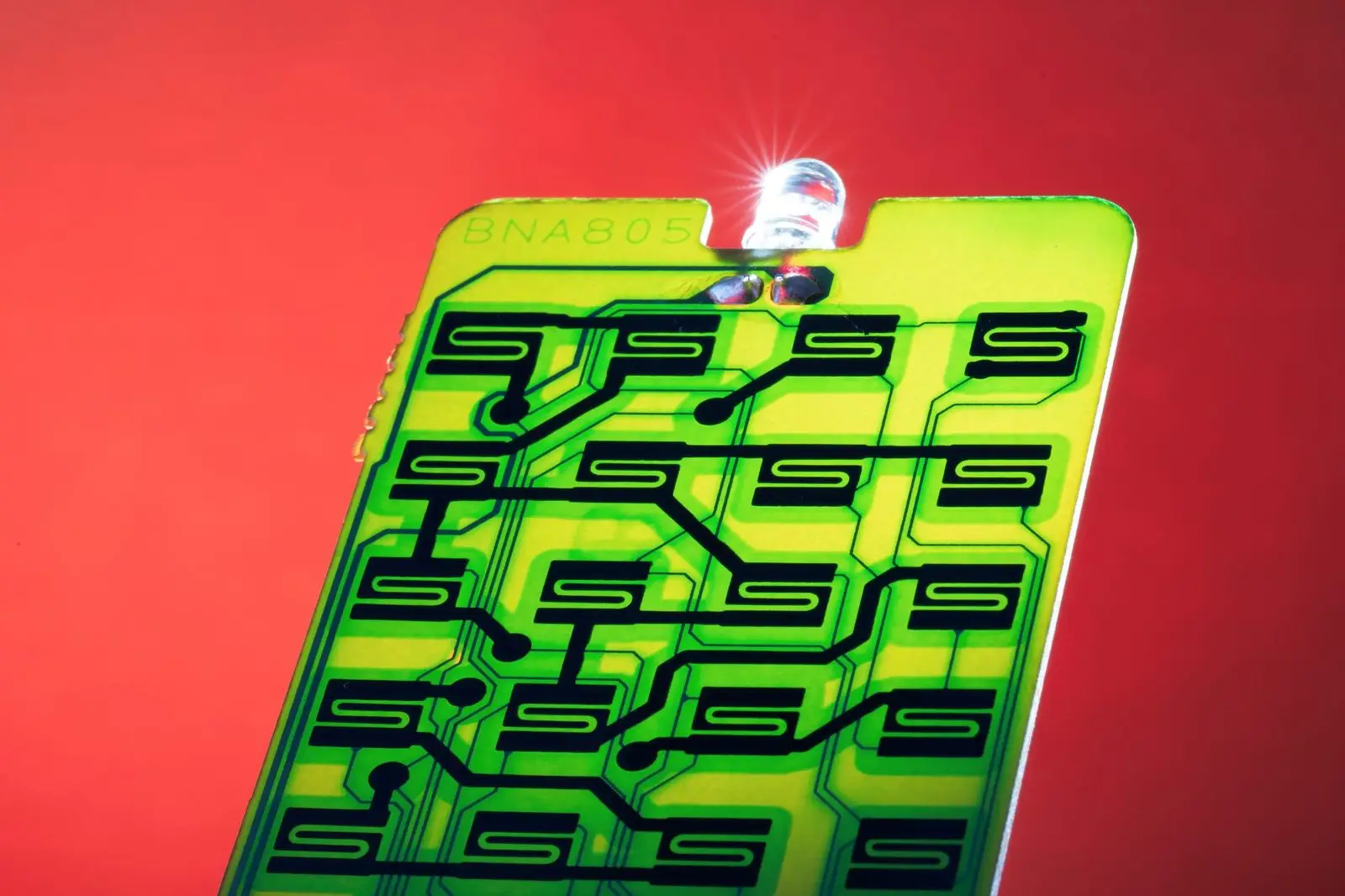
Maker-based activities work on a different axis. When a student is soldering a circuit, programming a robot to navigate a maze, or designing and building a functioning mechanical arm, their brain is engaged in what occupational therapists call productive occupation — purposeful, hands-on activity that produces a concrete outcome. The research base here comes partly from OT work with anxiety disorders in clinical populations, but the principles translate directly to school settings.
Dr. Winnie Dunn’s sensory processing research and the broader occupational science literature on “flow states” both point to the same finding: task-focused physical activity that produces visible progress creates a neurological environment incompatible with sustained rumination. You can’t simultaneously track whether your code is compiling correctly and maintain a worry loop about social rejection. The brain has to choose, and the task wins.
There’s also a mastery dimension that standard SEL doesn’t replicate. When a student builds something that works — a robot that completes a challenge, a birdhouse that comes together, a dish they designed from scratch — they have physical, undeniable evidence of their own competence. That matters specifically because adolescent anxiety is strongly tied to perceived helplessness and a sense of low personal efficacy. Mastery experiences are one of the few things known to actually shift those perceptions at the neurological level, not just the cognitive one.
The Low-Stakes Environment Is Not Incidental — It’s the Point
Here is where the after-school context becomes structurally significant. During the school day, almost everything a student does is evaluated. Grades, behavior records, teacher perception, peer judgment — the threat-detection architecture of an anxious adolescent is tracking all of it, all day. The cumulative cognitive load is substantial.
After-school maker programs, when designed well, operate outside that evaluation system entirely. There are no grades. Failure is expected and reframed as iteration. A robot that doesn’t work on the first try is the normal starting point, not evidence of inadequacy. For a student who has spent six hours in a graded environment, this shift is not trivial — it is neurologically significant.
School counselors who have referred students to maker-based after-school programs consistently report observations like: “She’s completely different in that space,” or “He’ll stay an extra hour troubleshooting something when he won’t spend ten minutes on homework.” That behavioral shift is not random. It reflects a student whose nervous system is no longer in evaluation mode.
At Kodely, this is something our instructors see across program types — whether students are in robotics, coding, culinary arts, or environmental science. The common thread isn’t the subject matter. It’s the combination of hands-on production, low-stakes iteration, and visible outcome. Those three elements together create a consistent pattern: students who arrive distracted and dysregulated often settle into focused engagement within 15 to 20 minutes of starting a building or making task.
A Framework for Administrators: Positioning Maker Programs as Mental Health Complements
Most administrators currently categorize maker and STEM after-school programs under academic enrichment. That framing isn’t wrong, but it’s incomplete — and it matters for how programs are funded, justified, and integrated with other student supports.
Here is a practical framework for repositioning maker programs as a mental health complement within your broader student support structure:
1. Connect the program to your counseling team explicitly
Counselors should know which students are enrolled in maker programs and should be able to refer students directly. When a counselor identifies a student who is ruminating heavily and not responding well to talk-based support, a structured maker program is a legitimate complementary intervention — not a distraction from mental health work, but a parallel track that addresses a different part of the problem.
2. Document behavioral observations, not just academic outcomes
After-school programs typically report on attendance and academic skill gains. Add a behavioral observation layer: are students arriving dysregulated and leaving regulated? Are students who struggle to engage in the school day showing sustained focus in the program? That data is meaningful for MTSS and student support teams, and it builds the case for program continuity in funding conversations.
3. Communicate the distinction to parents
Parents of anxious middle schoolers are often looking for therapeutic support and may not immediately recognize a robotics or coding program as relevant. Explicitly framing the program’s low-stakes, mastery-based structure — and what that does for a student who is carrying anxiety through the school day — changes how parents understand the value they’re getting.
4. Protect the low-stakes structure intentionally
There is a real risk that as maker programs gain credibility, schools will want to add graded assessments, competitive elements, or performance benchmarks. Some of that is appropriate. But the mental health benefit depends significantly on the non-evaluative quality of the environment. Administrators who understand this will protect that structure even as they document outcomes for other purposes.
What the Research Doesn’t Fully Capture Yet
It’s worth being honest about the limits of the current evidence base. Most of the research connecting hands-on making with anxiety reduction is extrapolated from occupational therapy literature, flow state research, and mastery experience studies — not from randomized controlled trials of after-school maker programs specifically. That research is coming, but it isn’t complete.
What we have now is a strong mechanistic argument, consistent practitioner observation, and a body of adjacent research that points in the same direction. For administrators making programming decisions, that is a reasonable evidentiary basis — particularly when the intervention carries minimal risk, serves multiple developmental goals simultaneously, and is already something many schools are running.
The students sitting in your counselor’s office every Monday morning, describing weekends full of worry and school days full of dread, are not going to be fully served by any single intervention. But after-school maker programs address a specific gap — the need for mastery, productive occupation, and a low-stakes environment — that most other interventions leave open. That’s worth taking seriously.