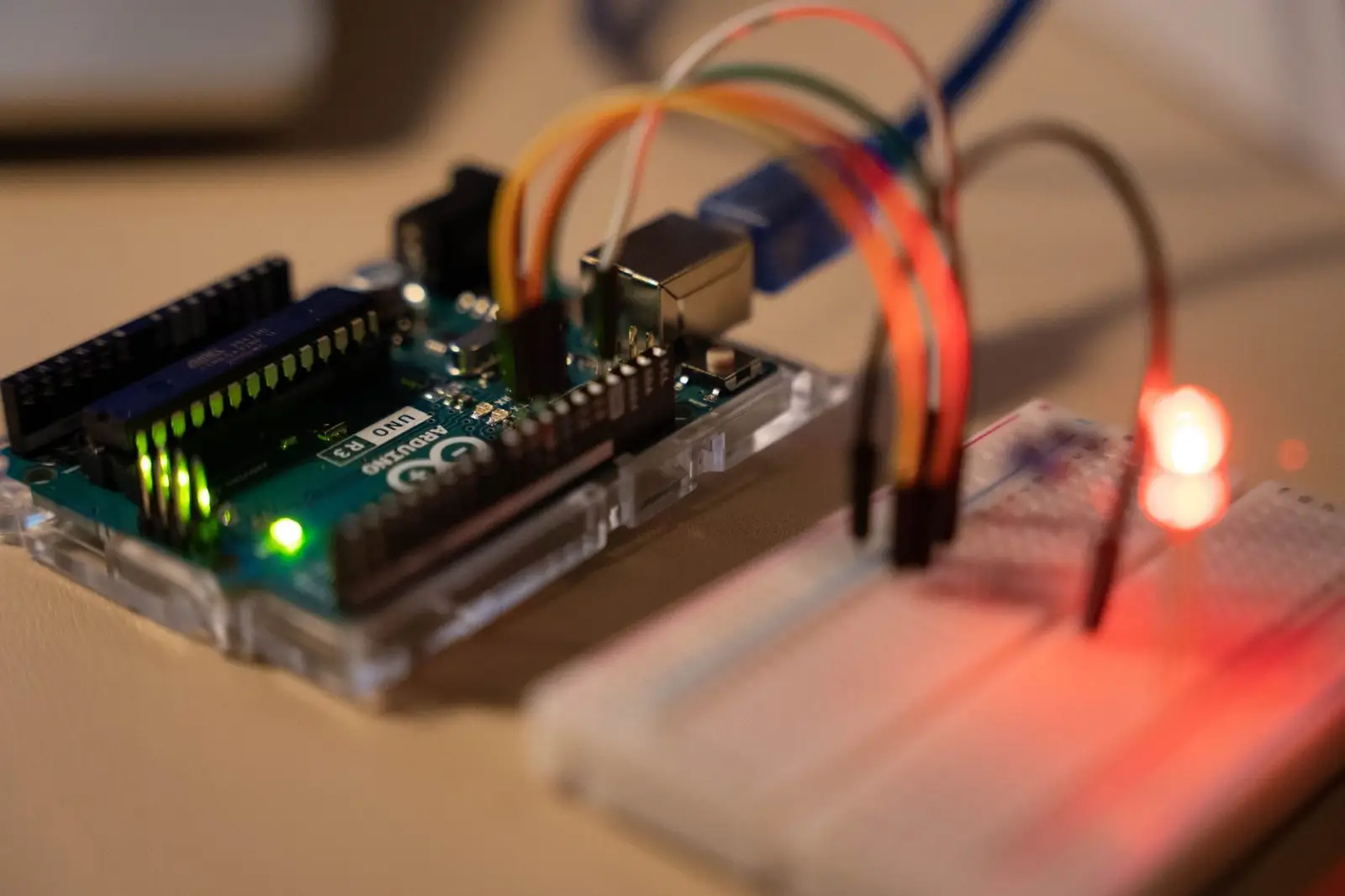
When schools evaluate after-school programs for English language learners, the conversation usually centers on language-focused interventions — tutoring, reading support, homework help. Maker and STEM programs rarely come up. That’s a missed opportunity, and the data on how ELL students actually acquire language and build academic confidence suggests it’s a significant one. Project-based, hands-on enrichment formats offer something that traditional language instruction often can’t: a low-stakes environment where students can participate fully before they can explain what they’re doing in English.
Why Traditional Enrichment Programs Create Unintentional Barriers for ELL Students
Most after-school enrichment programs are language-heavy by design. Debate club, creative writing, book clubs, even many sports programs that emphasize verbal coaching — these formats put ELL students at an immediate disadvantage. The academic language demands are high from the first day, and for a student still building English proficiency, that experience of not understanding instructions or feeling unable to contribute to a group discussion is enough to prevent re-enrollment.
This is compounded by how programs get communicated to families. Flyers go home in English. Program descriptions emphasize verbal activities. Recruitment happens through word-of-mouth networks that ELL families, who are often newer to a school community, may not yet be plugged into. The result is a quiet, structural exclusion that no one designed intentionally but that shows up clearly in enrollment numbers. At many Title I schools, ELL students are underrepresented in enrichment programming relative to their share of the student body — not because of disinterest, but because the pipeline was never built for them.
What Makes Maker and STEM Programs Different for English Language Learners
Hands-on, project-based programs operate on a fundamentally different participation model. When a student is building a robot, wiring a circuit, designing a bridge out of popsicle sticks, or coding a simple animation, the primary communication happening in that moment is physical and visual. A student who doesn’t yet have the English to explain their reasoning can still demonstrate it through their hands.
The role of shared, concrete vocabulary
Maker and STEM environments generate what researchers call “content-specific vocabulary” — a relatively small set of words tied directly to visible objects and observable actions. Words like “motor,” “gear,” “loop,” “sensor,” “code,” and “circuit” refer to things students can point to, touch, and manipulate. This is precisely the kind of vocabulary that ELL students acquire fastest, because meaning is immediately contextual rather than abstract. A 2019 study published in the Journal of Science Education and Technology found that ELL students in project-based science environments showed stronger science vocabulary gains than peers in traditional instruction formats, even when controlling for baseline English proficiency.
Peer collaboration without a language prerequisite
In a well-run maker program, collaboration is built into the structure. Students work in pairs or small groups toward a shared physical goal. That shared goal creates what linguists call “negotiated interaction” — the back-and-forth communication that happens when people are trying to accomplish something together. For ELL students, this kind of purposeful interaction is far more generative than drills or worksheets, because meaning is constantly being negotiated through gesture, demonstration, and trial and error, not just words.
Peer collaboration in these settings also tends to be more equitable than whole-group verbal activities. A student who can successfully troubleshoot a code error or figure out why a structure collapsed earns status in the group through competence, not language fluency. That shift matters enormously for the confidence and belonging of students who are used to being positioned as struggling.
The identity dimension
There is a well-documented relationship between academic identity and language acquisition — students who see themselves as capable and contributing members of a learning community acquire language faster. Maker programs, when staffed well, create repeated experiences of student competence. A student who builds something that works, solves a problem the group was stuck on, or teaches a peer a technique they figured out independently is having a fundamentally different identity experience than a student who spends enrichment time catching up on what they missed in class. That identity shift has downstream effects on engagement across the school day.
What Administrators Can Do Right Now to Recruit and Retain ELL Students
Waiting for ELL families to self-select into maker and STEM programs is not a strategy. Active, intentional recruitment requires changes to how programs are communicated, positioned, and structured.
Translate materials and involve multilingual staff in outreach
This sounds obvious but is routinely skipped. Program flyers, permission slips, and family information should be translated into the primary languages of your ELL population. More importantly, the recruitment conversation should happen through trusted messengers — bilingual paraprofessionals, family liaisons, multilingual parents who are already engaged with the school. A flyer is not outreach. A conversation is outreach.
Lead with what students will build, not what they will learn
When communicating with ELL families about maker or STEM programs, lead with the tangible, visual product. “Your child will build a working robot” communicates across language barriers in a way that “your child will develop engineering thinking skills” does not. Show photos and short videos from the program wherever possible. Let the work speak before the words do.
Structure the first session to succeed without full English comprehension
The first session is when ELL students will decide whether they belong in this environment. Instructors should plan activities that are genuinely accessible without full English comprehension — activities where demonstration does most of the work and where students can see exactly what they’re supposed to do before they’re asked to do it. Kodely’s instructors are trained in this approach across all programs, including robotics, coding, and environmental science, specifically because so many of the schools we serve have significant ELL populations.
Build in structured peer pairing when possible
Where you have students who share a home language, intentional pairing in early sessions can lower the anxiety barrier enough to get students through the first few weeks, after which English-language interactions tend to accelerate naturally. This is not a long-term scaffolding dependency — it’s an onboarding tool.
The Equity Case for Expanding Access
ELL students in the United States currently represent about 10.4 percent of public school enrollment, according to the National Center for Education Statistics. In high-need urban and rural districts, that proportion is often significantly higher. These are students whose families frequently made extraordinary sacrifices to get them into American schools, and who often arrive with strong academic preparation in their home languages and deep curiosity about science, technology, and design. The question is whether schools are building enrichment pathways that meet them where they are.
Maker and STEM after-school programs are not a silver bullet for language acquisition, and they shouldn’t be positioned as one. But they offer something that language-heavy enrichment formats cannot: full participation from day one. For students who spend much of their school day working twice as hard to access the same content as their English-proficient peers, that experience of unimpeded engagement is not a small thing. It is, for many of them, the thing that keeps them coming back.
Schools that intentionally recruit ELL students into hands-on enrichment aren’t doing these students a favor. They’re correcting a structural gap that has been leaving an already-underserved population further behind. The programs that do this well — and Kodely has worked alongside many of them — tend to see stronger ELL retention, more consistent family engagement, and measurable gains in student confidence that teachers notice in the classroom.