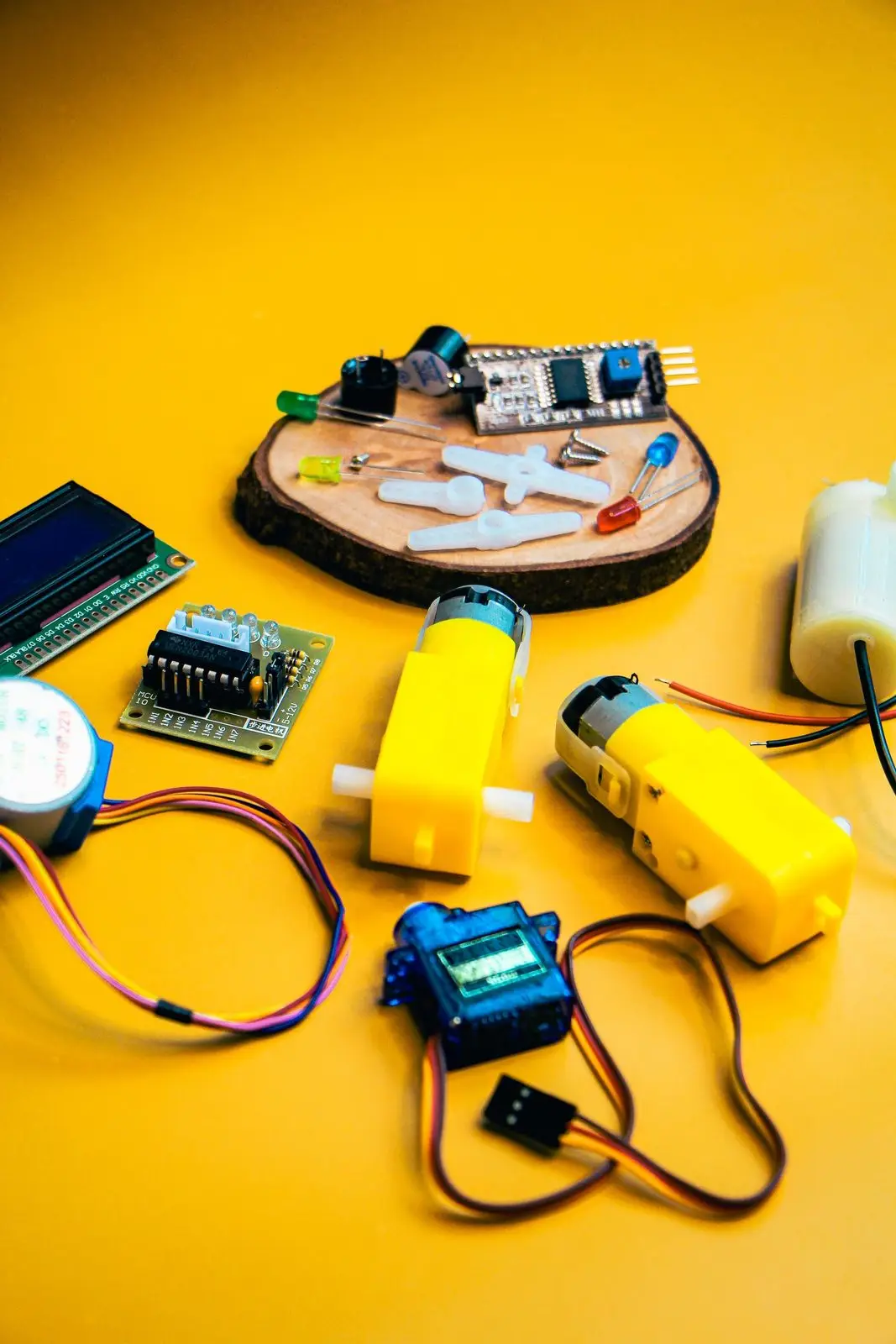
If you oversee a 21st Century Community Learning Centers grant, you’ve probably heard the same unofficial rule repeated at every program officer meeting: 21st CCLC funding robotics programs and maker spaces fall outside the allowable use categories. That assumption is wrong, and it’s costing schools in high-need communities access to some of the most effective enrichment programming available. The actual statute and most state-level guidance documents are broad enough to cover robotics, coding, engineering challenges, and hands-on STEM maker activities — provided you document the activities correctly and tie outcomes to the right federal language. This post breaks down exactly how to do that.
What the 21st CCLC Statute Actually Says About Allowable Activities
The 21st CCLC program is authorized under Title IV, Part B of the Every Student Succeeds Act (ESSA). The statute defines allowable activities as those that “advance student academic achievement and support student success,” including science, technology, engineering, and mathematics activities, arts and music education, and programs that complement students’ regular academic programs.
That language is deliberately permissive. Congress did not write a narrow list of approved activities. The statute also includes “literacy education programs,” “services for individuals who are not proficient in English,” and “cultural programs” — all under the same umbrella. Robotics and maker programming fits squarely under STEM enrichment, which is named explicitly.
The U.S. Department of Education’s non-regulatory guidance, last updated in 2003 but still in effect, reinforces this. It emphasizes that programs should be “high quality” and “evidence-based where possible,” but it does not restrict administrators to tutoring and homework help. That restriction is a local interpretation — not a federal one.
How to Position Robotics and Maker Programs in Your Budget Narrative
Budget narrative language is where most proposals fall apart. Program officers flag requests not because robotics is explicitly prohibited, but because the administrator failed to connect the activity to allowable outcomes. Here is the specific framing you need.
Use STEM and Academic Enrichment Language, Not Product Names
Instead of writing “robotics kit purchase,” write “hands-on engineering and computational thinking enrichment supplies.” Instead of “maker space equipment,” write “project-based learning materials supporting science and mathematics skill development.” The activity is the same. The documentation language determines whether it clears review.
For personnel line items, a robotics instructor should be described as a “STEM enrichment specialist providing project-based learning in engineering design, computational thinking, and applied mathematics.” These are not games with words — they are accurate descriptions that also align with how the Department of Education categorizes allowable program staff.
Specific Budget Line Items That Work
The following line items have been successfully used in 21st CCLC budgets at Kodely partner schools to cover robotics and maker programming:
- Instructional supplies and materials (covers kits, components, consumables)
- Contracted services or consultant fees (covers external enrichment providers and certified instructors)
- Professional development for program staff (covers instructor training in robotics curriculum)
- Technology equipment (covers tablets, laptops, and programmable devices used in instruction)
- Indirect costs at the approved rate (applies to the full program budget including STEM enrichment)
Capital equipment purchases — meaning single items over your district’s capitalization threshold, often $5,000 — require prior approval in most states. Keep individual equipment purchases below that threshold or bundle them appropriately. A set of 10 robotics kits at $300 each is an instructional supply purchase, not a capital expenditure.
The Vendor Documentation Your Program Officer Needs
Program officers approve or flag requests based on what they can defend to their state education agency auditors. When you bring in an external provider for robotics or maker programming, you need to supply documentation that protects both parties. Here is the specific paperwork that removes friction from the approval process.
A Scope of Work Tied to Learning Objectives
Any vendor contract or memorandum of understanding should include a scope of work that explicitly lists the academic and developmental outcomes of the program. For a robotics program, this means stating measurable objectives such as: students will demonstrate proficiency in sequential programming logic, students will complete a design-build-test engineering challenge cycle, students will improve problem-solving skills as measured by pre/post assessment.
Vague scopes of work — “vendor will provide robotics instruction twice weekly” — invite questions. Specific scopes of work with measurable student outcomes close the loop before your program officer opens it.
Evidence of Program Quality
ESSA requires that 21st CCLC activities be evidence-based where practicable, following the tiered evidence definitions in ESSA Section 8101. Your vendor should be able to provide research citations, pilot data, or third-party evaluations supporting the effectiveness of their curriculum. Programs aligned to frameworks such as NGSS (Next Generation Science Standards) or CSTA (Computer Science Teachers Association) standards carry additional credibility in documentation review.
Kodely, for example, provides partner schools with a documentation packet that includes curriculum alignment maps, outcome data from comparable school sites, and sample scope-of-work language written specifically for 21st CCLC compliance review. Administrators at Title I schools should expect any serious enrichment vendor to supply equivalent documentation.
Outcome Reporting Language That Satisfies Federal Requirements
The 21st CCLC program requires grantees to report data through the state’s program evaluation system, most commonly through the APR (Annual Performance Report). Federal reporting focuses on attendance, academic indicators, and family engagement — not on specific program activities. This is important because it means robotics programs are measured the same way tutoring programs are measured: by student attendance, school-day behavior and attendance trends, and academic performance data.
To satisfy reporting requirements, you need to track the following for every student enrolled in your robotics or maker program:
- Days of participation in the enrichment activity
- School-day attendance data before and after program enrollment
- Teacher survey data on student academic engagement and behavior
- Any available pre/post assessment data from the program itself
When you write your narrative report at the end of the grant year, connect participation data to outcomes explicitly. “Students who participated in 30 or more days of STEM enrichment programming showed a 12 percent improvement in school-day attendance compared to the prior year” is the kind of sentence that satisfies program officers and supports your renewal application.
What to Do If Your Program Officer Pushes Back
Some program officers have enforced informal interpretations of allowable activities for years and will push back on robotics or maker requests even when you submit clean documentation. Here is a practical sequence for handling that situation without damaging the relationship.
First, ask for the specific statutory or regulatory citation that excludes the activity. In most cases, no such citation exists and the program officer is working from convention rather than policy. Second, reference the ESSA Title IV, Part B statutory language on STEM activities directly. Third, if the issue persists, request a written clarification from the state education agency’s 21st CCLC office. Written requests for clarification almost always produce written responses that affirm the broader statutory interpretation.
Schools that have gone through this process once rarely face pushback in subsequent years. The documentation becomes part of the program’s institutional record, and the precedent is set.
Building a Robotics Program That Lasts Beyond the Grant Cycle
One concern administrators raise often is sustainability. 21st CCLC grants run in three-to-five-year cycles, and building a program around a single funding stream creates risk. The strongest approach is to use the grant cycle to establish the program, build staff capacity, and generate outcome data that supports future funding requests — whether from Title I set-aside funds, district discretionary budgets, local foundations, or state STEM initiative grants.
At Kodely partner schools, the robotics and maker programs that sustain themselves longest are the ones where at least one school staff member has been trained in the curriculum by the end of year two.